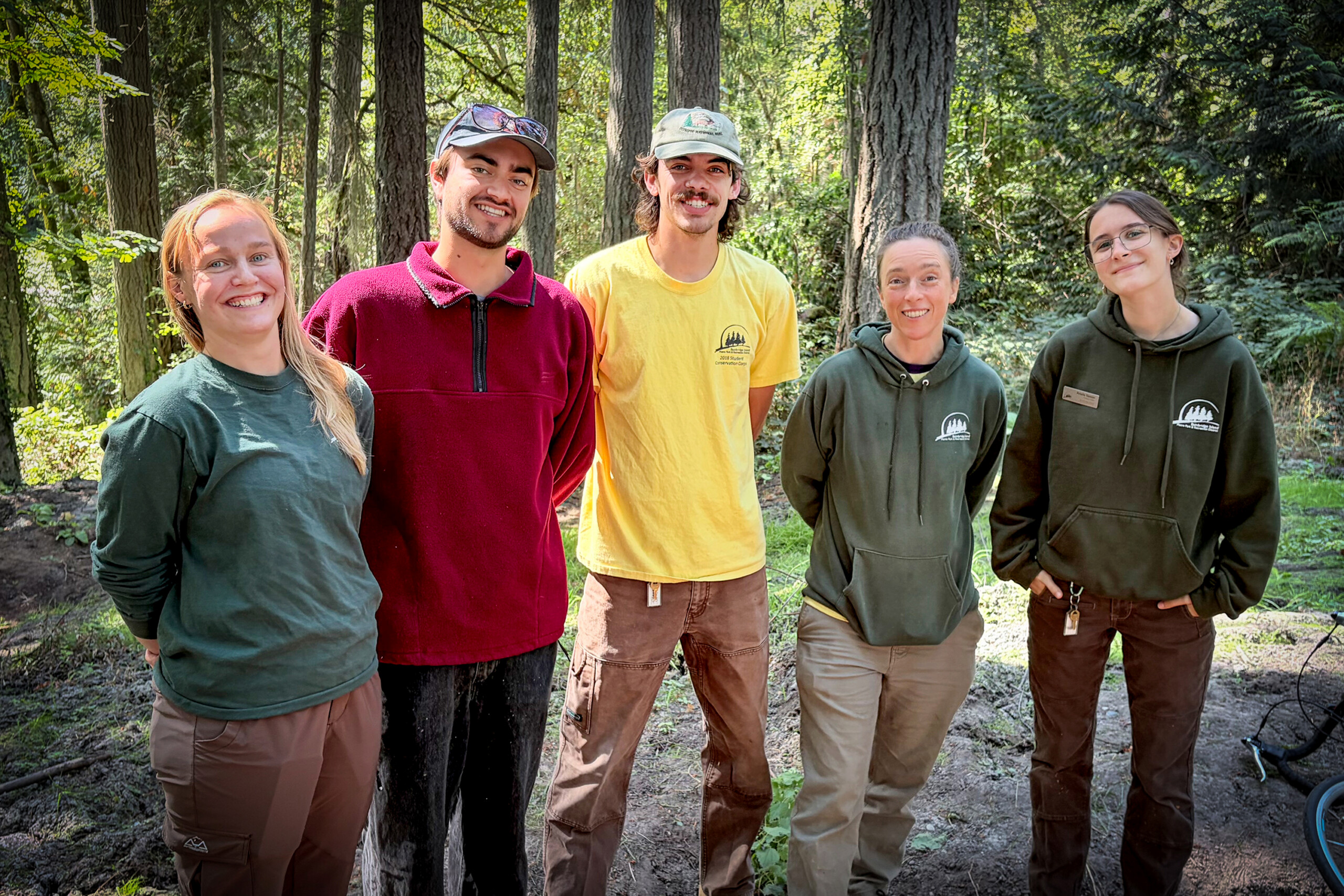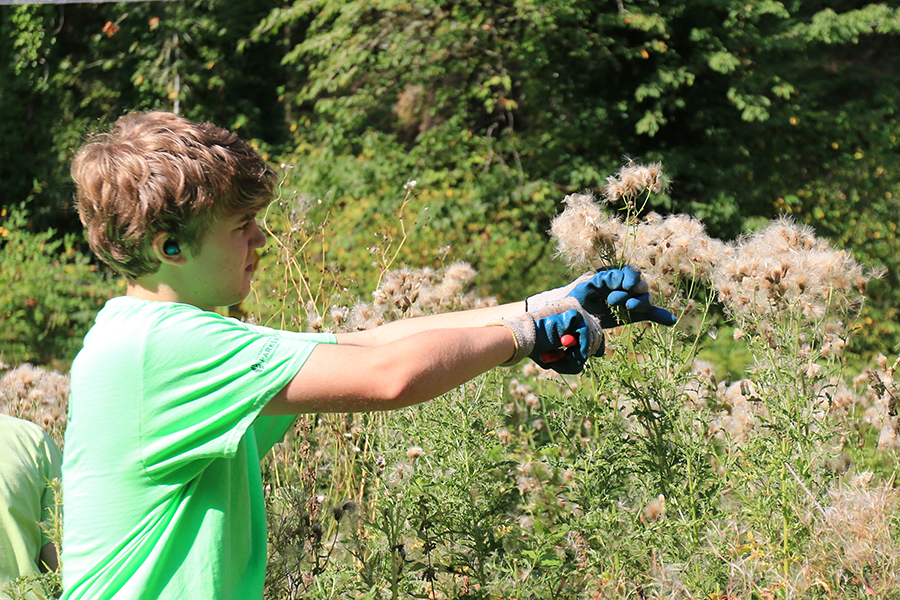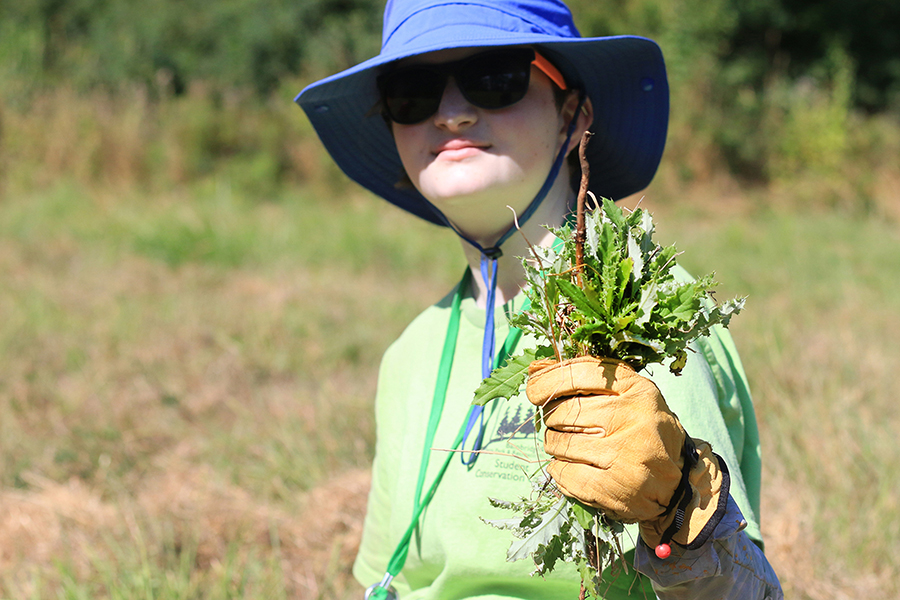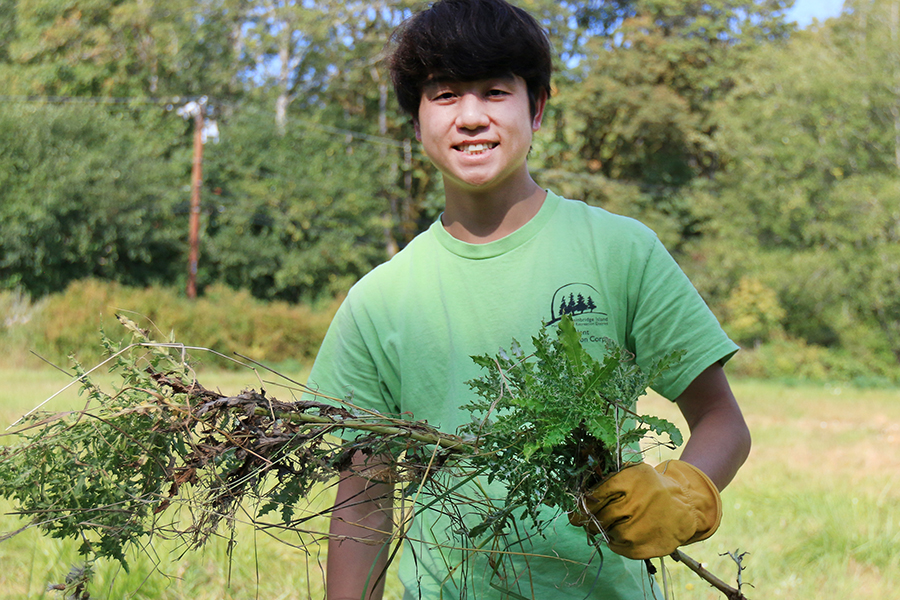

From its inception, Student Conservation Corps has had a dual mission: to engage young people in critical restoration work in parks islandwide, while inspiring the next generations of environmental stewards.
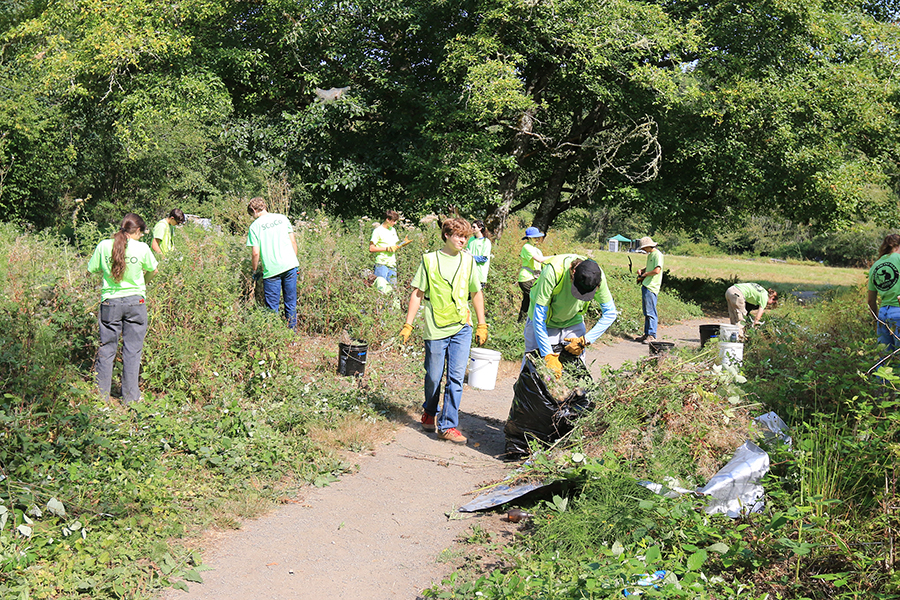
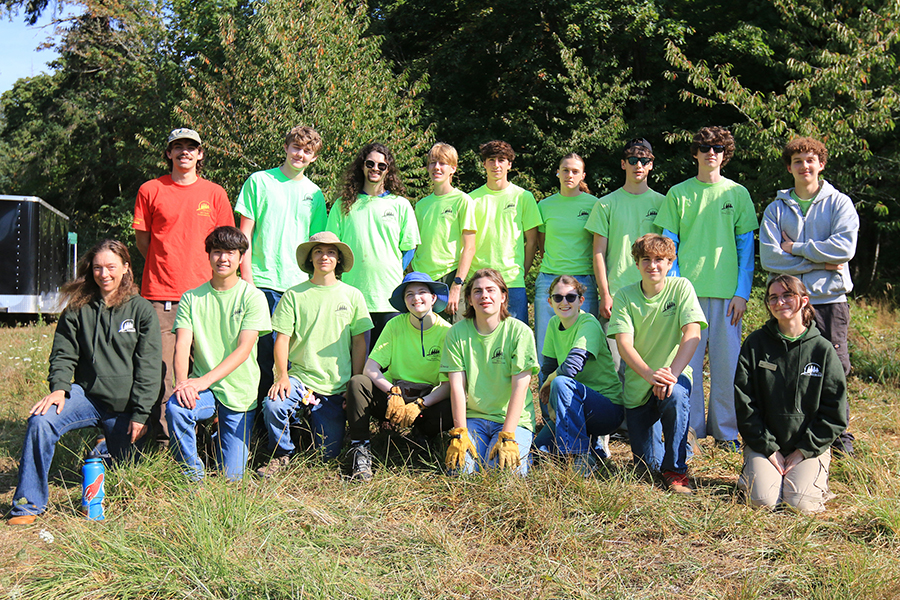
The summer 2026 edition (its 15th) was a banner year: 53 high school-age students contributed some 2,756 service hours, over four, three-week sessions across 12 parks: Battle Point, Fort Ward, Strawberry Hill, Hidden Cove, Grand Forest, Fay Bainbridge and Manzanita parks, the Ted Olson and Gazzam Lake preserves, and the Lost Valley and Farm trails.
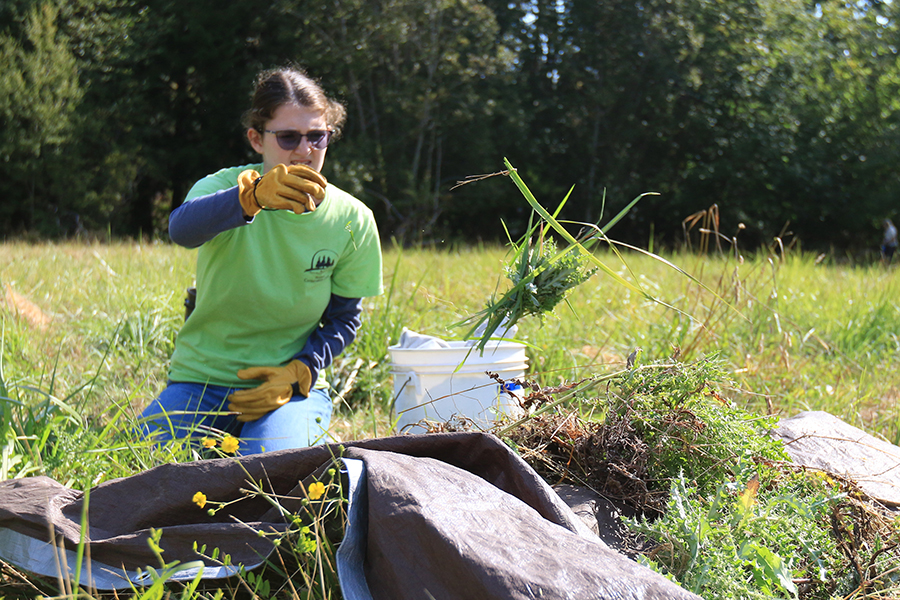
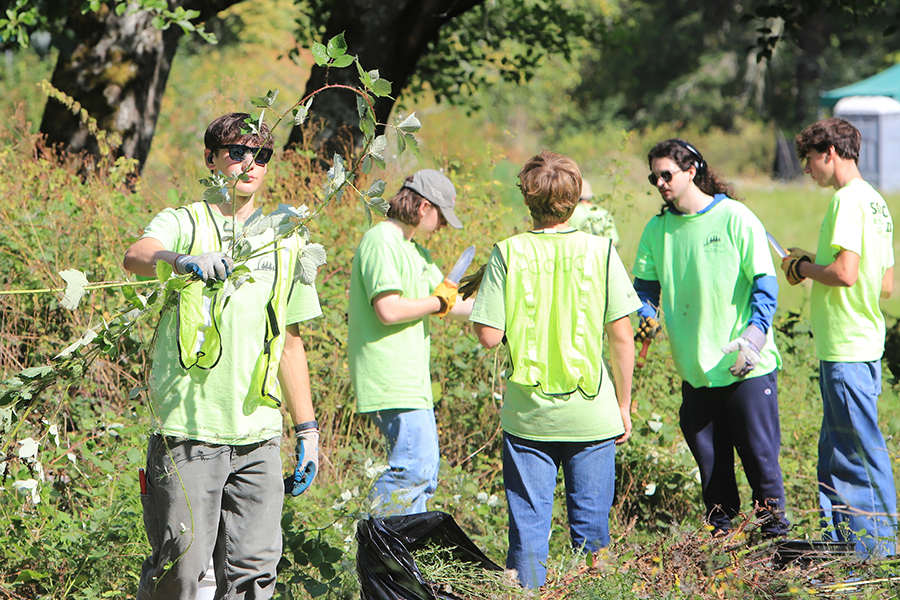
The young conservationists cleared invasive species from an estimated 150 trees, and tugged more than 200 patches of invasives like ivy, holly, blackberry and Scotch broom.
For parks and students alike, the work is transformative.
"Once you notice Scotch broom, you can't un-notice it. You cannot un-see it," said Amelia Slatton, a BHS graduate and SCOCO alum who returned this year as one of five crew leaders for Bainbridge Metro Parks. "Then you go to a park and you're like, wow, it's incredible that we have this meadow and there's no Scotch broom here – because when you see a clear-cut or something, it's everywhere.
"You start noticing how much time and effort it takes for people like us to go out and pick every single thistle or every single Scotch broom individually."
During their week at Grand Forest East, SCOCO did just that – targeting "every single stalk" of Scotch broom. There were many.
"It was so satisfying," Slatton said. "You feel really accomplished because there are so many people at Grand Forest who use that area. People walk by and say, 'Oh, thank you for the work you're doing,' and it feels very rewarding."
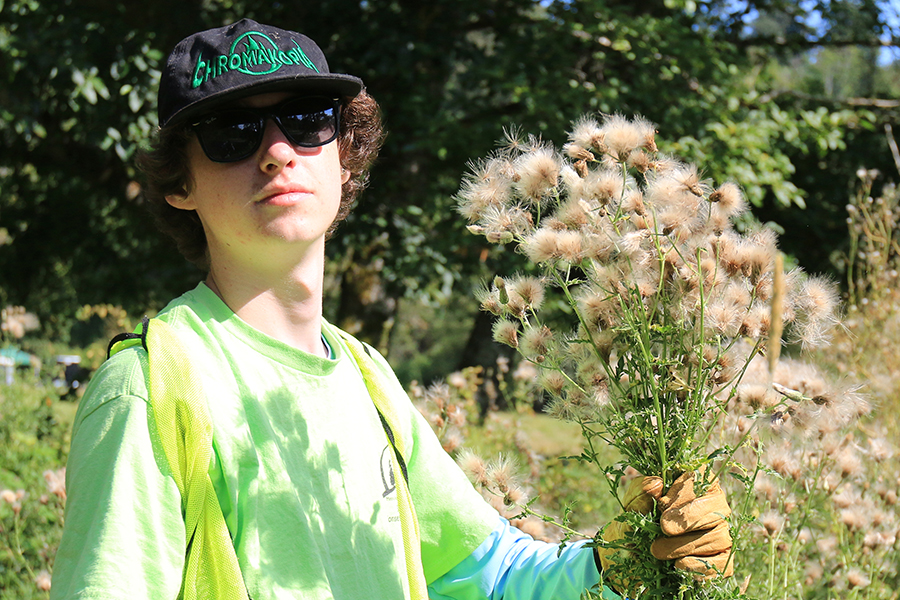
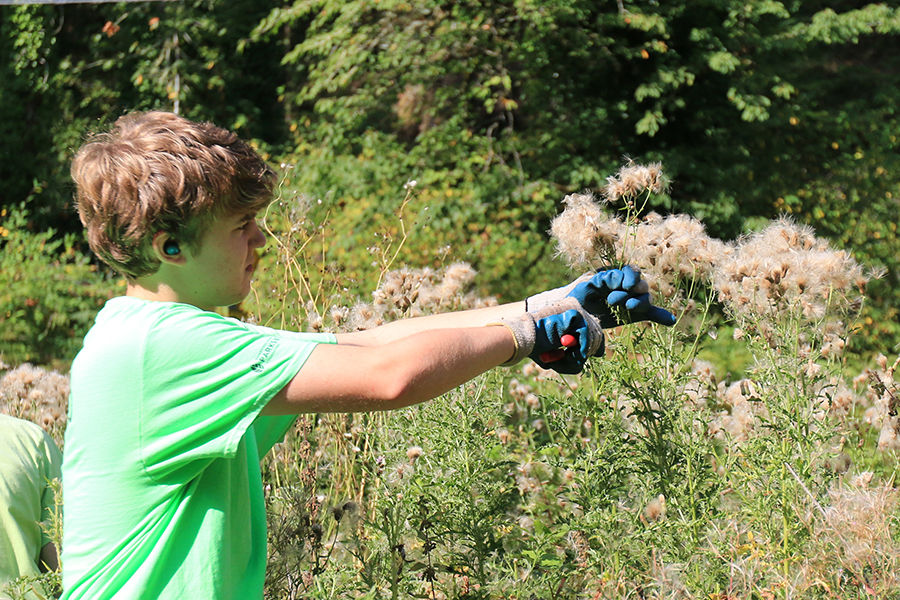
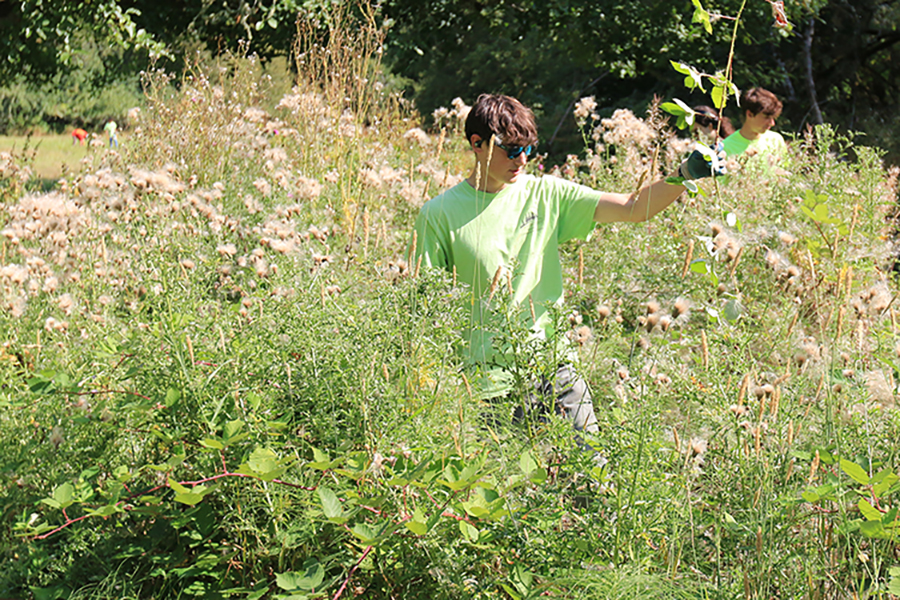
At Blakely Harbor Park – where the SCOCO program was launched by the Parks & Trails Foundation, so many years ago – the target this time was invasive Bull thistle (Cirsium vulgare). The work was painstaking and minute, with students combing the Blakely meadow for thistle seedlings in the field grass. Others attacked swaths of mature thistle, a sea of telltale spiny stalks, purple flowers and amber puffs along the roadside.
"Thistle has just one big root, so it's pretty clear when you get it," said Collin Fehrenbacher, a second-year SCOCO participant digging into the meadow. It was an exercise in discernment; students learned that a native thistle, rarer and dearer, looks less spiky and generally "kinder." Pull one, leave the other.
The Parks & Trails Foundation has granted more than $200,000 for ecological restoration at Blakely Habor over the past decade. Annual support for SCOCO through donor gifts helps sustain the program.
"Student Conservation Corps is a program the Foundation is proud to have established and that our donors love to fund," said Mary Meier, Parks & Trails Foundation Executive Director. "Not only are these students making an important impact in our parks, but they are also learning and building skills, for many their first job, outside with their friends."
The impact of so many young restorative hands-on Blakely Harbor and other island parks, over so many years, is evident. Perhaps that’s why Tony Wisneski, a first-time Conservation Corps crew leader, noted a spirit of environmental optimism across the summer sessions.
“My favorite thing I got out of SCOCO was hopefulness about the next generation’s drive to serve our environment,” Wisneski said. “Coming from a town where climate change wasn’t talked about much through school, it was very cool to see every single student expressing their knowledge and concern about climate change and relate it to the work they are actively doing.”
Most SCOCO workdays featured lunchtime speakers from environmental fields, and Wisneski saw students come away with a wider perspective on jobs in conservation.
“It took me until four years after graduating high school to get involved in environmental work, and it feels really good to help students reach this realization earlier than I had,” he said.
Echoed crew leader Chenoa Siegenthaler, who holds a graduate degree in ecology and social action: “Students were able to learn a lot about plants, ecology, and work. Some mentioned being grateful for the guest speakers and their knowledge and enthusiasm, as well as just becoming aware of the breadth of career opportunities available in the conservation field.”
Consider Amelia Slatton as proof of concept. A casual park user as an island youth, she was galvanized by her SCOCO experience two years ago and now studies Environmental Science at Western Washington University. Having returned as an assistant crew leader for the Park District this summer will look good to future employers who value experience with local government, she said.
“I know not every person who joins this program wants to do environmental science as a career for the rest of their life,” Slatton said. “But I think even baseline knowledge of what invasive species are is valuable, so that you don’t plant laurel at your house. Or you remove the Scotch broom that’s at your house. Just trying to impart that small ounce of wisdom is great.
“Ideally, everyone’s like, ‘I love conservation and I want to do this for my career,’ and that’s great. But if they don’t, that’s okay. As long as they’re upstanding citizens who understand the importance of having a park like this, and vote for parks when they’re 18, you know?”
Student Conservation Corps is a program of the Bainbridge Island Metro Park and Recreation District sustained by support from the Bainbridge Island Parks & Trails Foundation. Support the SCOCO program with a gift, www.biparksfoundation.org/support.